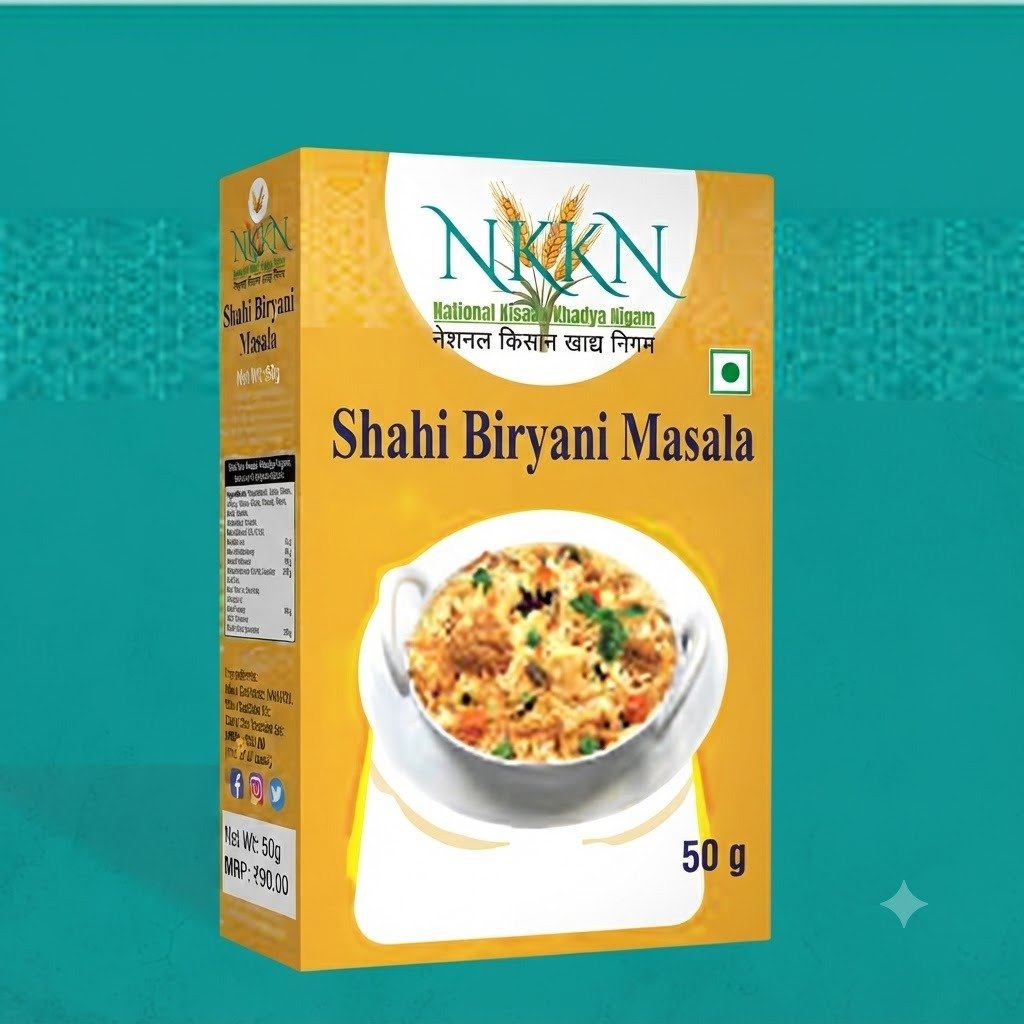
Biryani is much more than just a rice dish—it is a celebration of aroma, flavour, spices, and tradition. From family gatherings and festive occasions to weekend lunches and special dinners, a perfectly prepared biryani has a unique ability to bring everyone to the dining table. The secret behind an unforgettable biryani lies not only in perfectly cooked rice or fresh ingredients, but also in the quality and balance of its spices. NKKN Brand Sahi Biryani Masala is created to make that authentic, rich, and aromatic biryani experience easier to achieve in your own kitchen.
NKKN Brand Sahi Biryani Masala is a carefully prepared spice blend designed to complement the essential ingredients of biryani. It brings together the warmth of traditional Indian spices and the delicious aroma associated with royal-style biryani. Whether you are an experienced home cook or preparing biryani for the first time, this masala can help you create a flavourful dish with greater convenience and consistency.
The Royal Tradition of Biryani
Biryani has a fascinating culinary heritage and has become one of the most loved rice dishes across India. Different regions have developed their own styles, cooking techniques, spice combinations, and ingredients. From aromatic North Indian preparations to spicy regional versions, every biryani has its own personality.
Despite these differences, spices remain at the heart of almost every delicious biryani. Whole and ground spices work together to give the rice its characteristic aroma, colour, warmth, and depth. Getting the right balance of spices can sometimes be difficult when preparing a homemade spice blend.
This is where NKKN Brand Sahi Biryani Masala can become a convenient addition to your kitchen. Instead of measuring numerous individual spices every time you prepare biryani, a ready spice blend allows you to add a carefully balanced flavour profile more conveniently.
Carefully Balanced Spice Blend
The beauty of a good biryani masala lies in balance. Too much of one spice can overpower the dish, while too little can make the biryani taste flat. NKKN Brand Sahi Biryani Masala is designed with the idea of bringing together complementary spice flavours for a satisfying culinary experience.
The blend is intended to provide the characteristic warmth and fragrance expected from biryani masala. Its aromatic spice profile can work beautifully with rice, vegetables, paneer, chicken, or other preferred biryani ingredients.
When added during cooking, the masala combines with the other ingredients and allows its fragrance to spread throughout the dish. The result is an inviting aroma that can make your kitchen smell like a special celebration.
Rich Aroma for a Delicious Biryani
One of the first things people notice about biryani is its aroma. Before taking the first bite, the fragrance of spices, rice, herbs, and other ingredients creates anticipation.
NKKN Brand Sahi Biryani Masala is created to contribute to this aromatic character. The warm and fragrant spice profile can enhance the overall sensory experience of homemade biryani.
A delicious biryani should not only taste good—it should smell inviting as well. The combination of fragrant rice and aromatic spices makes biryani a dish that is enjoyable even before it reaches the plate.
Easy Biryani Preparation at Home
Preparing a traditional-style biryani can sometimes seem complicated because it involves several ingredients and cooking stages. Measuring multiple spices individually can also take additional time.
NKKN Brand Sahi Biryani Masala offers a convenient solution for everyday home cooking. With a ready spice blend, you can simplify the seasoning process and focus on the other important elements of your recipe.
A basic preparation can involve cooking your preferred ingredients with onions, tomatoes, ginger, garlic, herbs, and other ingredients before combining them with prepared rice. NKKN Sahi Biryani Masala can then be added according to your preferred taste and recipe.
This makes it suitable for busy households where people want to enjoy flavorful homemade biryani without spending too much time preparing a separate spice mixture.
Perfect for Different Biryani Styles
Biryani is wonderfully versatile. It can be prepared in many different ways depending on personal preference and regional traditions.
NKKN Brand Sahi Biryani Masala can be incorporated into a variety of recipes, including:
- Vegetable biryani
- Paneer biryani
- Chicken biryani
- Egg biryani
- Mushroom biryani
- Mixed vegetable biryani
- Family-style rice preparations
- Special festive biryani recipes
The masala can be adjusted according to the quantity of rice, ingredients, and desired intensity of flavour. This flexibility makes it a useful spice blend for both everyday cooking and special occasions.
A Great Choice for Vegetarian Biryani
Vegetarian biryani can be just as delicious and aromatic as other versions. Fresh vegetables such as carrots, peas, beans, potatoes, cauliflower, and capsicum can provide texture and natural flavour.
For a richer vegetarian preparation, paneer or other preferred ingredients can also be included. NKKN Brand Sahi Biryani Masala can help bring the different ingredients together by adding a warm and aromatic spice character.
A bowl of colourful vegetable biryani served with raita, salad, or a side of chutney can turn a simple meal into something special.
Enhancing Special Occasions
Biryani is often associated with celebrations, festivals, parties, family gatherings, and special meals. It is a dish that can easily become the centrepiece of a dining table.
When cooking for guests, consistency is particularly important. A ready-to-use masala can make spice measurement more convenient and help simplify preparation when larger quantities are being cooked.
Whether you are preparing a weekend family lunch or planning a festive dinner, NKKN Brand Sahi Biryani Masala can be a helpful companion in creating a fragrant and flavourful rice dish.
Versatile Kitchen Ingredient
A good spice blend should be useful beyond just one recipe. While biryani is its natural match, the aromatic character of NKKN Brand Sahi Biryani Masala can also inspire experimentation with other rice-based dishes.
Creative home cooks can explore different recipes by combining the masala with their preferred vegetables, paneer, herbs, rice varieties, and other ingredients. This flexibility encourages experimentation while maintaining the familiar flavour profile associated with biryani.
The amount used can also be adjusted depending on the recipe and individual taste preferences.
Consistency in Every Preparation
One challenge of making homemade spice blends is maintaining the same flavour every time. Small changes in the quantity of individual spices can significantly affect the final dish.
A ready-made spice blend helps simplify this process. NKKN Brand Sahi Biryani Masala provides a convenient seasoning option, allowing home cooks to avoid measuring numerous individual spices for every preparation.
This can be especially useful for beginners who are still learning how different spices work together.
A Convenient Choice for Modern Kitchens
Modern lifestyles are busy. People often want food that is delicious and traditional while also being practical to prepare.
NKKN Brand Sahi Biryani Masala brings convenience and traditional-inspired flavour together. It can reduce preparation effort while helping home cooks create an aromatic biryani-style dish.
From students and working professionals to families and enthusiastic home chefs, a convenient spice blend can make cooking enjoyable without making the process unnecessarily complicated.
How to Make Your Biryani More Enjoyable
For a delicious biryani, the masala is only one part of the cooking process. Using good-quality rice, fresh ingredients, appropriate cooking techniques, and properly cooked rice can make a significant difference.
A few simple practices can help:
- Choose good-quality rice suitable for biryani.
- Wash and prepare the rice properly before cooking.
- Use fresh vegetables or other preferred ingredients.
- Cook the ingredients until they develop good flavour.
- Add NKKN Brand Sahi Biryani Masala according to your recipe and taste.
- Avoid overcooking the rice.
- Allow the finished biryani to rest briefly before serving.
- Garnish with fresh herbs or other preferred toppings.
These simple steps, combined with a well-balanced masala, can help create a satisfying homemade biryani.
Why Choose NKKN Brand Sahi Biryani Masala?

NKKN Brand Sahi Biryani Masala is designed for people who appreciate the rich aroma and comforting flavour of biryani while also valuing convenience.
Some of its key advantages include:
Convenient to Use: A ready spice blend makes seasoning easier and reduces the need to measure many individual spices.
Aromatic Flavour: The blend is designed to contribute warmth and fragrance to your biryani.
Versatile: It can be used in vegetarian and non-vegetarian biryani recipes according to your preferred cooking style.
Suitable for Home Cooking: It is convenient for everyday meals as well as special occasions.
Encourages Creativity: Home cooks can experiment with different ingredients and cooking techniques while using the masala as a flavourful foundation.
Bringing Restaurant-Style Inspiration to Your Kitchen
There is something special about enjoying a fragrant plate of biryani at a restaurant, but homemade biryani has its own charm. You can choose your ingredients, adjust the flavours, control the spice level, and prepare the dish according to your family’s preferences.
NKKN Brand Sahi Biryani Masala can help bring that special biryani-inspired experience into your home kitchen. Its convenient format allows you to focus on cooking rather than spending extra time preparing a complex spice mixture.
The aroma rising from a freshly cooked pot of biryani can turn an ordinary meal into a memorable occasion.
Perfect Pairings
Biryani is delicious on its own, but the right accompaniments can make the meal even more enjoyable. Depending on your preferences, it can be served with fresh raita, cucumber and onion salad, mint chutney, pickle, or other traditional accompaniments.
A refreshing side can balance the warmth of the spices and add different textures to the meal.
For special occasions, you can also garnish your biryani with fresh coriander or mint and serve it attractively in a large serving dish.
The NKKN Brand Promise
NKKN Brand aims to make everyday food more enjoyable by offering convenient products that fit naturally into modern kitchens. With products designed around flavour and ease of use, NKKN seeks to help consumers explore delicious food without unnecessary complexity.
NKKN Brand Sahi Biryani Masala represents this approach by combining convenience with the familiar appeal of aromatic Indian spices.
It is more than simply an ingredient—it can be part of the experience of preparing a special meal for family and friends.
Conclusion
Biryani has earned a special place in Indian cuisine because of its wonderful combination of fragrant rice, delicious ingredients, and aromatic spices. Preparing the perfect spice balance at home, however, can take time and practice.
NKKN Brand Sahi Biryani Masala offers a convenient way to bring a rich, aromatic spice character to homemade biryani. Whether you prefer vegetable, paneer, chicken, egg, mushroom, or another variation, this versatile masala can become a valuable addition to your spice collection.
From everyday family lunches to festive celebrations, a flavorful biryani has the power to bring people together. With NKKN Brand Sahi Biryani Masala in your kitchen, creating an aromatic and satisfying biryani can become simpler, more convenient, and more enjoyable.